
What is Aikido?
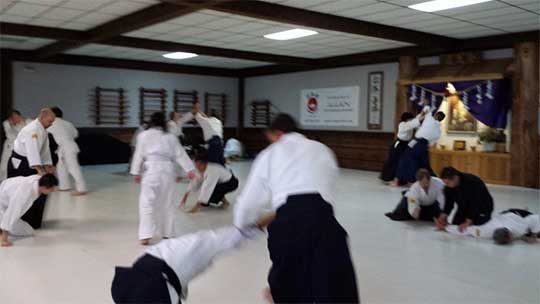
Aikido is a Japanese martial art developed by Founder Morihei Ueshiba. Aikido focuses not on punching or kicking opponents, but rather on using their own energy to gain control or to throw them away from you. It is not a static art, but places great emphasis on motion and dynamics of movement. Aikido movement at Nippon Kan is based on the spirit and movements of kenjutsu (sword movement); the heart of Japanese Budo.
More information on Beginning Aikido and classes offered at Nippon Kan can be found on our classes pages or on our web pages just for beginners at www.aikidoforbeginners.org.
Aikido Nippon Kan Dojo and Founder Gaku Homma Sensei
Aikido Nippon Kan, located at 1365 Osage Street, Denver, CO., is the largest Aikido dojo in the Rocky Mountain region. The school was founded in 1978 by Gaku Homma Sensei, who was a student of Aikido Founder Morihei Ueshiba, as well as other high-ranking instructors, at the Iwama Aiki Shrine in Japan. Homma Sensei was the last official uchideshi (live-in student) at the Aiki Shrine in Iwama and is the best testimonial to the Founder’s private life during the last years of his life. After the Founder’s death, Homma Sensei moved to the United States and opened his independent dojo; Nippon Kan.
Homma Sensei is the creator of Nippon Kan’s unique teaching method that combines kenjutsu (sword techniques) and jojutsu (staff techniques) with taijitsu (open hand techniques). Since the school’s inception in 1978, more than 25,000 students have attended Nippon Kan’s beginner’s Aikido classes at this Japanese traditional-style dojo. Homma Sensei’s teaching style combines his extensive Aikido background with his knowledge of other martial arts as well as his knowledge of Japanese, American and other cultures worldwide. Homma Sensei has instructed Aikido in over 35 countries and is world renowned for his mastery of Aikido and his personal historical perspective on the Founder Ueshiba.
Unique to Nippon Kan is a focus on community service, and to date Homma Sensei and Nippon Kan students have served over76,000 meals to those in need in Denver in over 24 years of monthly meal service. In 2001, Homma Sensei founded AHAN-the Aikido Humanitarian Active Network taking his concept of the principles of Aikido and community outreach to an international level. As of 2015, AHAN has built 12 Learning Centers and orphanages for children in need in Bangadesh, Nepal, Thailand, Myanamar and the Philippines. Homma Sensei has been commended by the United Nations, Colorado Governors, Mayors and City Council and many other leaders internationally for his humanitarian efforts around the world.
Homma Sensei is also the author of five books about Aikido — The Structure of Aikido Volume 1, Aikido for Life, Children and the Martial Arts: An Aikido Point of View, and Aikido Sketch Diary: Dojo 365 Days — as well as a cookbook: The Folk Art of Japanese Country Cooking: A Traditional Diet for Today’s World.
Three of these books on Aikido are available to download from the homepage-free of charge.
An Introduction to Nippon Kan
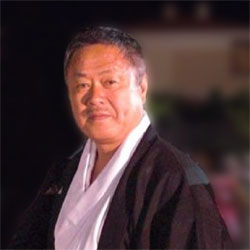 My name is Gaku Homma. I first came to the United States from Japan about 40 years ago. Since my arrival I have been teaching the Japanese martial art of Aikido. Including my studies in Japan, I have been practicing Aikido for more than 50 years. I would like to give you a bit of history about Aikido as I have experienced it during my lifetime.
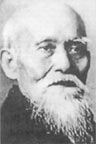
Aiki Jujitsu and Daito Ryu Jujitsu were two martial arts O’Sensei, studied to develop Aikido. Today the organization founded by Ueshiba is called Zaidan Hojin Aikikai, or the Aikido Foundation, which is based at Hombu Dojo in Tokyo.
Names such as Aikikai Aikido, Hombu Aikido and Ueshiba Aikido refer to this same organization. In the United States, the highest percentage of dojos (martial art schools) are affiliated with Aikikai Hombu Dojo. The United States Aikido Federation (USAF) is the largest of these Aikikai federations in the United States.
A few of O’Sensei’s students broke away from the Aikikai Foundation after his death in 1969. They formed their own organizations, such as Tomiki Aikido, Yoshinkan Aikido, and Ki Aikido.
As a child in Akita, a small city in Northern Honshu, I studied Judo, which for Japanese kids was as popular as baseball and basketball in the United States. At that time, Aikido was a new martial art. Before World War II Aikido was restricted to the elite and practiced by military leaders, Imperial dignitaries and top executives. It did not become generally popular until after World War II.
Most of the television heroes I watched as a child studied Judo and wore a hakama (the outer garment worn as part of an Aikido uniform). These TV supermen inspired me just as Bruce Lee films motivated Americans to learn more about Asian martial arts. In that way, my path was probably not much different than yours!
I, however, had the good fortune to become O’Sensei’s student. I also served as his last live-in student. After O’Sensei’s death, I studied with many other high-ranking Aikido instructors.
Before the end of World War II, O’Sensei moved from Tokyo to the town of Iwama, which is two hours northeast of Tokyo. There he built the Aiki jinja (Aiki shrine), and lived the rest of his life dedicated to the development of the art of Aikido.
During this time, Hombu dojo, located in Tokyo, was overseen by O’Sensei’s son, Kisshomaru Ueshiba. O’Sensei visited Hombu dojo about once a month, spending most of his time at the Iwama Aiki shrine. In his final years, O’Sensei received very few visitors at Iwama, keeping company mainly with his wife, Hatsu, and Morihiro Saito 1928-2002). O’Sensei became somewhat isolated with only his maid, Kikuno, and myself in attendance.
For the last year of his life, O’Sensei was moved to Tokyo, where he stayed until his death.
It has been my belief that all Aikido organizations are part of the same family under the Founder, O’Sensei. After his death, I was not able to choose one organization over another. Instead, I studied Aikido independently.
I founded Aikido Nippon Kan in 1978 as an independent dojo. I created and developed my own system of study based on what I learned from O’Sensei.
Although Aikido Nippon Kan remains an independent organization, my loyalty will always remain with the Founder, Morihei Ueshiba. I maintain a close relationship with Iwama’s Aiki shrine dojo and other direct students of the Founder as part of the heritage of my youth.
In the years since O’Sensei’s passing, the late Morihiro Saito, 9th degree black belt, became a world-renowned Aikikai Shihan (master instructor) and also the chief instructor (dojo cho) of the Aikishrine Dojo in Iwama. He often spoke of the early days at Iwama and my relationship to the Founder. He has also attested that I am the last official uchideshi, or live-in student, of the Founder and the only person in the United States who can testify so personally about the O’Sensei’s final years. Until his death in the spring of 2002, Morihiro Saito was a special advisor to Aikido Nippon Kan.
Because Aikido Nippon Kan is an independent organization, the ranking certificates given forkyu (beginning through brown belt levels) and black belt levels are signed by myself as Nippon Kan’s Founder. Though we are an independent school, our roots are the closest to the Founder’s of any dojo in the United States.
At Nippon Kan General Headquarters, over 25,000 students have attended our beginner classes in over 40 years of practice. Aikido Nippon Kan offers 16 classes a week, instructed by myself or and my highly trained staff. All instruction is given under close supervision and is delivered with patience, kindness and humor. All students are trained to help each other, focusing on cooperation as a successful tool for learning. Beginning classes are tailored to the brand new student’s level, with great consideration given the student’s feelings and capabilities. This unique teaching method has been developed by myself and is outlined in my books: The Structure of Aikido, Vol. 1; Aikido for Life; Aikido Sketch Diary—Dojo 365 Days; Children and the Martial Arts: An Aikido Point of View; and The Folk Art of Japanese Country Cooking.
As Founder and Chief Instructor of Aikido Nippon Kan, I welcome you to join our beginning Aikido programs here at Nippon Kan and hope you enjoy learning Aikido at Nippon Kan.
Gaku Homma, Nippon Kan Kancho